

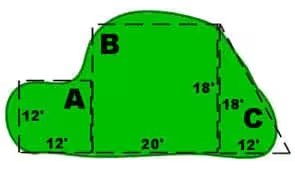
 Start by dividing the area to be worked into squares, rectangles, and triangles, (as in the diagram above)
 Figure the area of each shape.
 Add the square footage of all areas to get 612 square feet, (144 + 360 + 108)
HINT: Add 5 to 10 percent, to account for the odd shaped areas that fall outside of the perfect squares, rectangles, and triangles.
In the example above, you would add about 60 square feet! 672 (612 + 60).
 Important: Underground utilities & liability
Before proceeding with your bid, please review and acknowledge the following:
Start by dividing the area to be worked into squares, rectangles, and triangles, (as in the diagram above)Figure the area of each shape.Add the square footage of all areas to get 612 square feet, (144 + 360 + 108)HINT: Add 5 to 10 percent, to account for the odd shaped areas that fall outside of the perfect squares, rectangles, and triangles.
In the example above, you would add about 60 square feet! 672 (612 + 60).
Important: Underground utilities & liabilityBefore proceeding with your bid, please review and acknowledgethe following:
Hidden Underground Utilities – Waiver and Release of Liability
By hiring RotoTillerGuy to perform soil excavation, tilling, digging, or related ground preparation services, the Customer acknowledges that the work may involve the use of a RotoTiller machine, PickAxe, Shovel and when necessary, a Jackhammer.
The Customer understands that underground objects, utilities or structures may be hidden beneath the soil and may not be visible before or during the work. These may include water lines, gas lines, drain pipes, electrical wiring or cords, irrigation lines and other underground structures or utilities.
The Customer acknowledges that such items may have been improperly installed, inadequately buried, or not installed in accordance with applicable codes or recommended depths. These items may therefore be encountered unexpectedly during normal digging or soil preparation.
To the extent permitted by applicable law, RotoTillerGuy shall not be responsible or liable for damage to underground utilities, lines, pipes, wiring, irrigation systems, or other hidden items that could not reasonably be identified or located before the work was performed.
The Customer is responsible for identifying, disclosing and properly marking any known underground utilities, lines, pipes, wiring, irrigation systems or other buried items before work begins.
I have read and agree to the Hidden Underground Utilities Waiver and Release of Liability.