
The starting point for a healthy lawn begins with proper grass care. The grass needs soil that has received proper preparation before it can start growing. Homeowners who want to install a new lawn focus their efforts on selecting the best grass and sod and landscaping options. But even the best grass can struggle when it is installed over compacted, uneven, poorly drained, or nutrient-deficient soil.
Proper soil preparation creates the foundation that new grass needs to establish strong roots and grow evenly. The soil requires basic preparation through loosening and leveling and amendment work before homeowners can install their new grass. The soil requires professional preparation along with lawn rototilling to achieve its complete potential.
What Is Soil Preparation for a New Lawn?
Soil preparation is the process of getting the ground ready for new grass. The process requires developers to remove existing plants while they work to break down compacted earth and they must enhance soil composition through organic material addition and they need to fix elevation issues and build proper surfaces for grass and seed application.
The goal is not simply to make the ground look clean. The goal is to create soil that allows grass roots to access air, moisture, and nutrients while providing enough stability for healthy growth.
The lack of soil preparation during installation leads to various problems which emerge after the grass starts to grow. The new grass will show uneven growth patterns while developing dry spots and creating weak root systems and water retention problems and areas of poor grass growth.
Why Compacted Soil Can Cause Lawn Problems
The main obstacle which lawn renovation workers face during their work involves dealing with soil that has become compacted. The soil develops compacted structure through human activities which include walking and driving and building and operating heavy machinery and landscaping and natural earth movements. The soil becomes too dense when the particles start to cluster together.
That makes it harder for:
- The soil stops grass roots from growing in new areas.
- The soil blocks water from flowing through its entire structure.
- The soil blocks air from reaching the area where roots grow.
- The soil blocks nutrients from reaching the new root growth.
Excess moisture to drain properly
A new lawn installed over heavily compacted ground may look healthy initially but struggle as the roots begin developing. Loosening the soil before installation can give the new lawn a much stronger foundation.
How Lawn Rototilling Helps Prepare the Soil
Lawn rototilling serves as a soil preparation method which breaks up current earth before people can plant their new lawn or design their landscaping space.
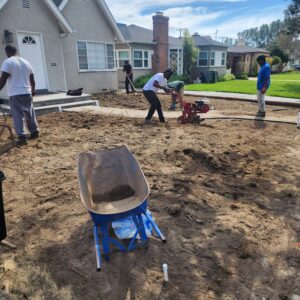
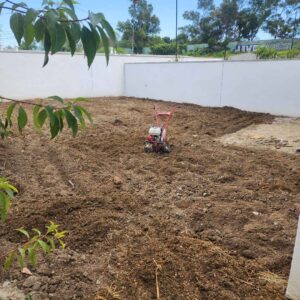
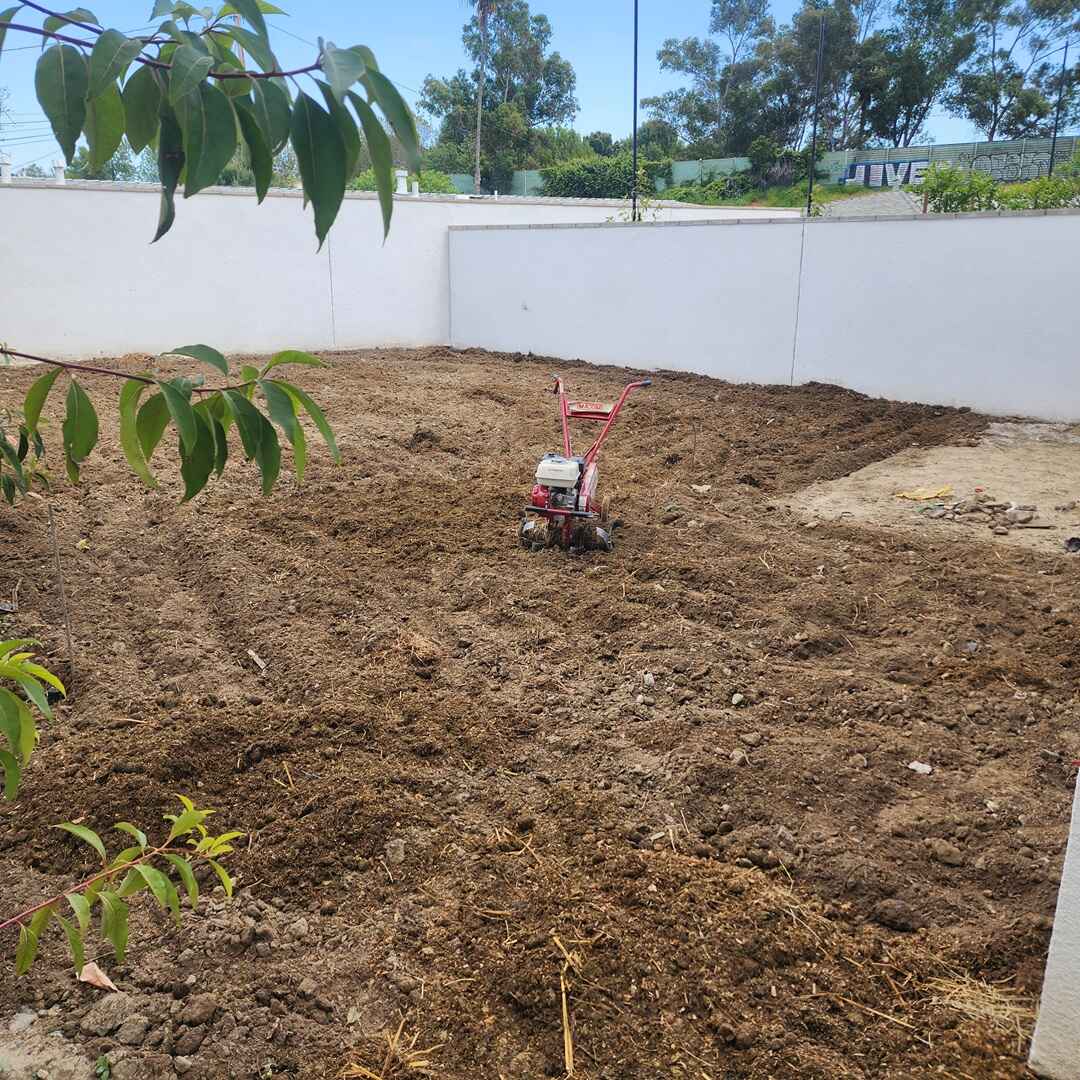
A rototiller breaks up compacted soil and mixes the upper layer, helping create a more workable planting surface. The soil condition determines when rototilling becomes necessary to distribute organic materials throughout the land.
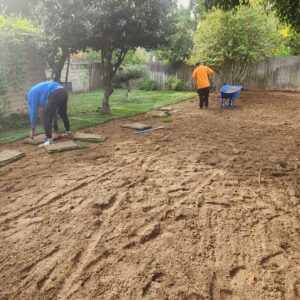
The image shows workers performing this particular preparation method at this moment. The land has received soil treatment throughout the entire area which resulted in a broken soil texture that requires further grading work before landscaping can proceed.
However, rototilling should not be treated as a universal solution for every property. The equipment selection process requires operators to assess soil health and water availability and existing vegetation and irrigation infrastructure and drainage systems and final landscaping requirements.
Professional evaluation helps determine whether rototilling, aeration, grading, soil amendment, or another preparation method is appropriate.
When Should You Consider Rototilling?
Rototilling becomes necessary when property soil reaches extreme compaction levels or when someone needs to transform an existing lawn into a new one.
The tool shows its greatest value when people need to establish new lawns or replace their current ones or they must get ready for sod installation or garden bed setup or landscape redesign or soil enhancement or they want to handle areas that have grown beyond control.
The tool shows its best value when people need to establish new lawns or replace their current ones or they need to get ready for sod installation or garden bed setup or landscape redesign or soil enhancement or they want to handle areas that have grown beyond control.
You need to evaluate your current lawn health to decide if you should avoid complete rototilling of your existing grass. The process requires specific aeration techniques which operate at precise locations to maintain harmony between the environment and its natural elements. Soil conditions together with plant objectives determine which method will work best.
Soil Preparation Before Sod Installation
Sod establishes an instant grass surface which beats the time it takes to grow a lawn from seeds but it requires a proper soil base. The soil needs to reach an average level before sod placement and all big items must get removed to create suitable conditions for root development.
The preparation process for typical projects includes two main steps which involve removing unwanted vegetation and loosening compacted soil while performing surface grading and drainage evaluation.
The final surface should provide good contact between the soil and the sod. The sod quality will not prevent new grass from struggling to grow because the soil underneath contains major air spaces and compacted soil and poor water drainage.
Soil Preparation for Seeded Lawns
Seeded lawns need proper soil preparation to achieve their best results. Grass seed needs good contact with the soil to germinate successfully. The surface becomes too hard and uneven with debris which prevents seeds from growing in a uniform pattern.
Proper preparation helps create a more uniform planting surface and gives developing roots a better environment. The preparation method requires assessment of grass species together with soil characteristics and present vegetation and environmental elements of the property.
Don’t Ignore Drainage During Soil Preparation
Drainage should be considered before installing a new lawn. A property can have excellent soil preparation and still experience lawn problems if water continually collects in certain areas.
The presence of standing water might indicate:
- The land shows signs of poor grading.
- The soil exists in a compacted state.
- The soil contains heavy clay material.
- The drainage system operates at an insufficient level.
- The landscape contains multiple surface water accumulation spots.
The process of lawn renovation becomes more effective for solving these problems when people handle them before they start planting their new grass.
The process of fixing drainage systems after a new lawn has been established requires people to remove grass areas which leads to major disruptions.
Soil Amendments Can Improve the Growing Environment
All properties show different types of soil characteristics. The soil in some yards shows signs of depleted nutrients while other sections contain too much clay or sandy soil or construction debris or experienced major soil disturbance throughout time.
The situation determines which organic materials and soil amendments will prove successful for enhancing the soil structure.
Compost serves as a valuable component in soil enhancement because organic matter supports soil structure and biological activity.
The selection process for amendments needs to base on actual soil conditions instead of using popular choices. A soil assessment will reveal what resources the property needs to fulfill its requirements.
Why Grading Matters Before a New Lawn
A smooth, properly graded lawn is not only better looking it also helps manage water. The property requires assessment for terrain features which include slopes and low spots and unlevel areas and water accumulation points before people can start their new lawn installation.
Proper grading helps direct water away from structures while reducing areas of standing water. The design process leads to a final lawn which needs less maintenance work. The uneven terrain becomes problematic for mowing operations while it creates irregular water distribution during irrigation.
The first grading work before installation becomes more manageable than trying to fix serious surface problems after the lawn establishes.
Preparing the Irrigation System
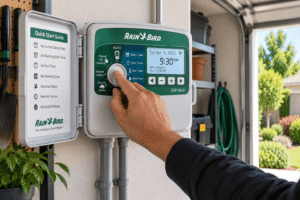
Soil preparation and irrigation should work together. A new lawn requires proper watering during its first growth period so you should check the irrigation system before you start installation whenever possible.
Check for:
- Broken sprinkler heads
- Uneven coverage
- Low water pressure
- Leaking pipes
- Poorly positioned sprinklers
Incorrect watering zones
The irrigation system fails to deliver uniform water distribution which results in uneven growth of healthy lawn emergence from properly prepared soil.
The planning stage for irrigation systems before grass installation will help you avoid various issues which will appear later.
Common Soil Preparation Mistakes
People often view soil preparation as a brief task which happens before their actual lawn construction work begins.
The following mistakes occur frequently:
Skipping Soil Evaluation
Soil assessment becomes impossible when people lack knowledge about soil characteristics because they cannot identify its need for amendment or its need for loosening or grading or drainage solutions.
Working Wet Soil
Working soil when it is excessively wet can damage soil structure and create additional compaction.
Ignoring Existing Irrigation
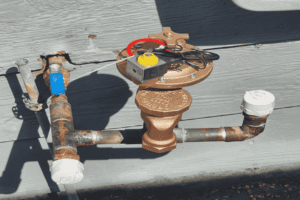
Digging and tilling without identifying irrigation lines can damage underground components.
Installing Grass Over Uneven Ground
Small surface problems can become much more noticeable after the lawn is installed.
Focusing Only on the Grass
Choosing premium sod or seed cannot compensate for poor soil conditions.
How Professional Soil Preparation Supports Long-Term Lawn Health
Professional preparation includes creating suitable conditions for yard installation which goes beyond basic yard preparation.
The landscaping team with experience will assess the entire property by studying how soil conditions and grading and drainage systems and irrigation and grass selection interact with each other.
This method works best for big lawn renovations and properties which have tough soil conditions. The new lawn will develop an even base and stronger roots when the foundation receives proper preparation.
Final Thoughts
A successful new lawn installation starts below the surface. The process of selecting between sod and grass seed requires you to study the soil composition and water drainage patterns and land elevation and irrigation system setup. The soil requires loosening before installation because compacted soil exists and poor soil needs suitable amendments and drainage systems and grading issues need to be fixed.
The correct property conditions will determine when lawn rototilling becomes necessary but the proper approach depends on each specific property. The goal is simple: create a healthy foundation before putting new grass on top of it. Your new lawn will develop better root growth and maintain regular growth patterns and receive water efficiently and sustain its health for a long time when you prepare the soil correctly.