
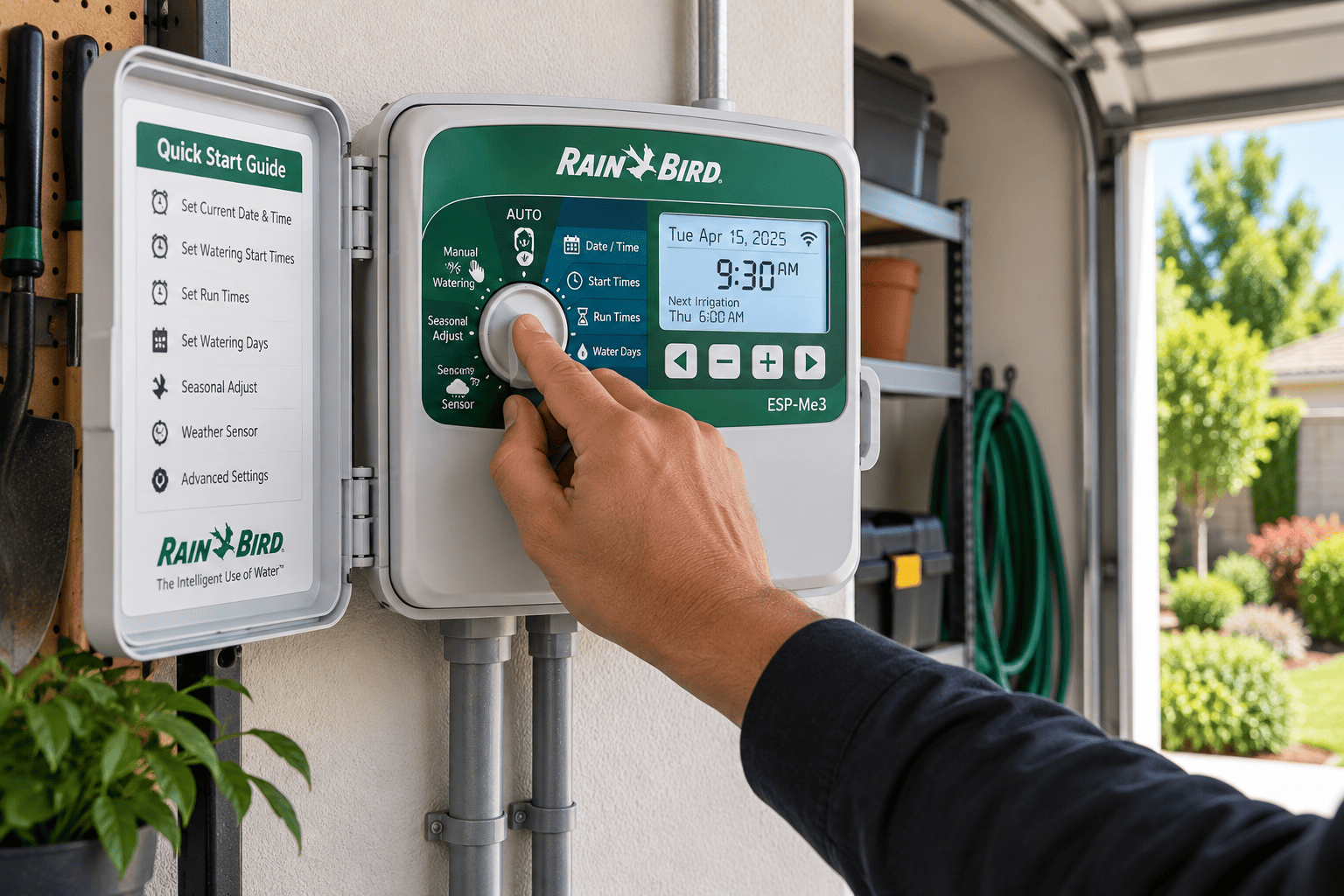
Most of the fall lawn problems we get called about have nothing to do with broken parts. The timer is still running its July program in October. The lawn is soggy, the sidewalk is wet every morning, and the water bill has not dropped at all.
Your fall sprinkler schedule should not look like your summer one. The days are shorter. Nights are cooler. The grass simply uses less water. But cutting back too early can hurt a lawn just as fast as overwatering can.
Here is how we step a system down each fall, and what we tell homeowners who call us asking how to adjust their sprinkler timer themselves.
Why a Summer Schedule Stops Working in the Fall
Grass loses water two ways. It pulls water up through the roots, and it loses water through the leaf blades in the heat and sun. In July, that loss is at its peak.
By late October, that same lawn needs a lot less. Some rough numbers we see on real jobs:
- A lawn that needed 100% of its summer water in July needs about 75% in late September.
- By mid October, it usually needs around 60%.
- By late November, 40% to 50% is often plenty.
Keep watering at 100% and the extra water has nowhere to go. It sits in the root zone. Roots stay shallow, fungus moves in, and the soil stays wet enough to grow mushrooms.
When Should You Start Cutting Back?
Not on September 1. Here in Los Angeles County, September is often hotter than August. We have seen 105 degree days in the Valley in the last week of September.
Our rule is simple. Start reducing after the last real heat wave has passed and nights stay below about 60 degrees for a week. For most years, that lands somewhere between late September and mid October.
Then cut back in steps, not all at once. A lawn that goes from full summer water to half in one day will show stress within a week.
A Simple Fall Sprinkler Schedule You Can Follow
This is the stepped schedule we use as a starting point. Every yard is a little different, so watch the lawn and adjust.
| Period | Watering level | What to change |
| Late September | About 75% of summer | Cut run time on each zone by roughly a quarter |
| Mid October | About 60% of summer | Cut run time again, or drop one watering day |
| November | 40% to 50% of summer | Water fewer days, keep run times short |
| After a real rain (half inch or more) | Off | Turn the system off for 3 to 5 days, then restart |
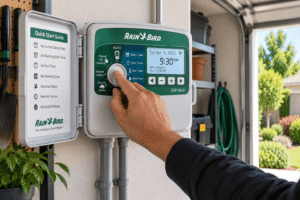
Most controllers from Hunter, Rain Bird and Orbit have a “seasonal adjust” or “water budget” button. That one button changes every zone by a percentage. Set it to 75%, then 60%, then 50%. You do not need to reprogram each station.
How Long Should Each Zone Run in the Fall?
Run time depends on the type of head on that zone:
- Spray heads put water down fast. They usually run shorter, and they cause most runoff problems on slopes and clay soil.
- Rotors put water down slowly. They need longer run times to soak in.
- Drip zones on shrubs and beds can often be cut back the most in fall. Many shrubs need half their summer water by November.
If water runs onto the sidewalk before a zone finishes, split it into two shorter cycles an hour apart. This is called cycle and soak. The first cycle wets the soil. The second one actually soaks in.
Know Your City’s Watering Rules
If you are on LADWP, the rules still apply in fall. Odd numbered addresses water Monday, Wednesday and Friday. Even numbered addresses water Sunday, Tuesday and Thursday. Standard spray systems are limited to one 8 minute cycle per station on those days. Systems with water conserving nozzles can run two 15 minute cycles. No outdoor watering between 9 a.m. and 4 p.m. You can check the full details on LADWP’s watering day rules.
Long Beach, Santa Monica and Torrance have their own water providers and their own rules. Check your provider before you set new days.
Different Grass Needs Different Fall Watering
This part trips up a lot of people:
- Tall fescue is a cool season grass. Fall is when it actually grows best. Do not cut it back as hard as other grasses. Keep it steady into October.
- Bermuda, St. Augustine and Kikuyu are warm season grasses. They slow down in the fall and start heading toward winter dormancy. These can be cut back more.
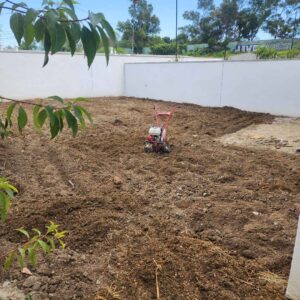
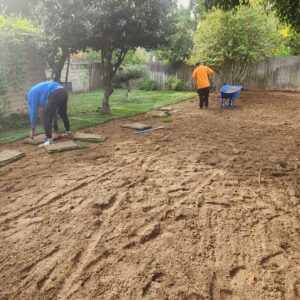
- New sod laid in the fall is its own case. It still needs short daily watering for the first two weeks, no matter what month it is. Do not put new sod on your fall schedule until the roots have grabbed the soil. Tug a corner. If it does not lift, you can start stepping down.
Watch Out for Santa Ana Wind Days
October and November bring Santa Ana winds. Hot, dry wind can pull more water out of a lawn in two days than a mild week does.
When a wind event is in the forecast, bump the seasonal adjust back up 10% to 15% for those days. Then bring it back down once the wind stops. Water early in the morning, before the wind picks up, so less of it blows away.
A smart controller handles this on its own by reading local weather. If you are tired of adjusting by hand every few weeks, read our post on the Rachio smart controller. The unit runs about $150 to $300. We will be honest. If your current timer works fine and you do not mind pressing a button once a month, you do not need one.
Signs Your Fall Schedule Is Wrong
| What you see | What it usually means | What to do |
| Mushrooms in the lawn | Too much water | Cut run time another 10% to 20% |
| Soft, spongy grass underfoot | Soil staying wet | Drop a watering day |
| Water on the sidewalk every morning | Runoff | Use cycle and soak, shorter cycles |
| One brown patch, rest is green | Coverage problem, not schedule | Check that head for a clog or bad angle |
| Whole lawn dull and gray green | Cut back too far, too fast | Go back up one step and hold for a week |
That fourth row matters. If one spot is brown and the rest looks fine, more water on the whole zone will not fix it. It just drowns everything else.
When the Problem Is the System, Not the Schedule
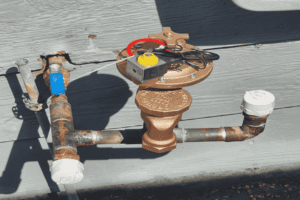
Sometimes the schedule is fine and the system is not. A zone that will not turn off. A timer that keeps losing its program after a power outage. A valve that weeps water all day.
If your controller resets itself or shows a blank screen, start with our guide to a broken sprinkler timer. Often it is just a dead backup battery.
If it goes past that, call us. Text Mike a few photos of the timer, the valves and the problem area. He will usually tell you right on the phone whether it is a quick fix you can do yourself. If it is not, we come out with the right parts for sprinkler repair the first time. We have done it this way for over 25 years as a C27 licensed contractor (CSLB #974733).
Frequently Asked Questions
How often should I water my lawn in the fall?
For most established lawns, two to three days a week is enough in October. By November, many lawns only need one to two days. New sod and cool season grass like tall fescue need more.
Should I turn my sprinklers off completely in the fall?
Not until the rains start. Turn the system off for 3 to 5 days after a rain of half an inch or more. Then turn it back on at your reduced fall setting.
What time of day should I water in the fall?
Early morning, before 9 a.m. The grass dries during the day, which lowers the chance of fungus. Watering at night in cool weather keeps the blades wet for hours.
Can I just cut my run time in half on October 1?
We do not recommend it. A sudden drop stresses the lawn, especially if a heat wave hits after. Step down in two or three stages over about a month.